

Lights on Pillars: Outdoor Pillar Lighting Ideas for Porches, Gates and the Holidays
Introduction
Overview of Lights on Pillars
Pillars are the part of a house that people notice without knowing they noticed. They hold up the porch roof, frame the front door, and mark the end of the driveway. In daylight they do their job quietly. After dark, unlit, they disappear and the entry disappears with them.
Lights on pillars fix that in one move. A wrapped column, a lit post cap, a pair of glowing gate pillars at the road: each one gives the eye a vertical line to follow and turns a dark entry into the brightest, most welcoming part of the property. It is one of the smallest lighting projects you can take on and one of the biggest changes per dollar.
This guide covers both versions of the job, the year-round kind and the December kind. We install and rent lighting across Central and Northern Virginia, and pillar wraps are one of the items we hang most, so the practical parts of this come from a lot of evenings on porches with a ladder.
Importance of Outdoor Lighting
Outdoor lighting does more than make a house pretty. The U.S. Department of Energy’s guidance on outdoor lighting puts it plainly: good exterior lighting improves safety and security, and the fixtures that do it best are the ones aimed and sized to the task rather than flooding everything. Pillars are natural anchors for that kind of task lighting. They sit exactly where people walk the steps, the porch, the gate and they are already at the right height.
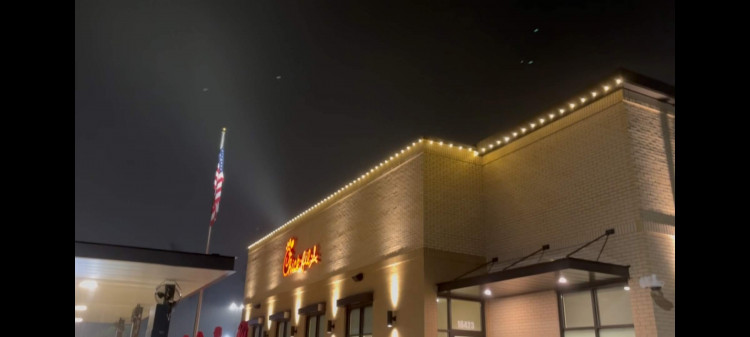
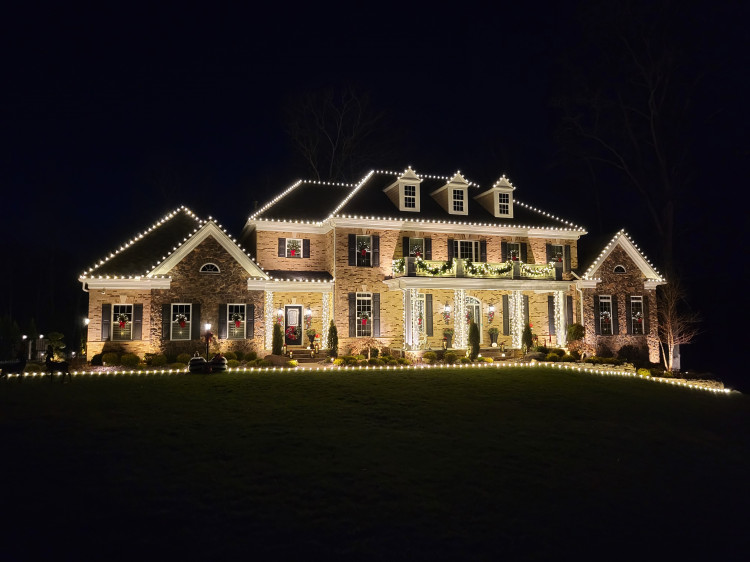
They are also where the design of a house lives. A roofline draws the outline; pillars give it a middle. That is why we treat them as the second layer of a display, right after roofline lighting: once the top edge of the house is traced, the columns underneath are what pull the light down toward the door.
Benefits of Using Lights on Pillars
Aesthetic Enhancement
The biggest visual problem with most homes at night is flatness. One porch light, one floodlight over the garage, and the house reads as a single bright smear with no depth. Lighting the pillars creates shadows and edges, and shadows and edges are what tell your brain that a building has shape.
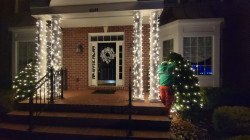
Wrapped columns also frame whatever sits between them. A front door with a lit pillar on either side looks designed. The same door with a wreath hung between two wrapped columns is the picture guests take on the way in. And because pillars are vertical, they connect the roofline above to the ground lights and shrubs below, so the whole display reads as one thing instead of a top and a bottom.
Improved Safety and Security
Pillars stand where the walking happens. Light at the porch columns spills onto the steps; light on a gate pillar shows the turn into the driveway. That is useful lighting, not just decorative, and it works best when it is low and even rather than a single hard beam from above.
Security is mostly about a property looking occupied and cared for. Lit entry columns do that better than a bare floodlight, and if you want the effect every night without a seasonal setup, a permanent lighting system under the eave with a couple of column accents will run on a timer twelve months a year. The U.S. Consumer Product Safety Commission’s holiday decoration safety tips make the same point we make on every job: check strands for frayed wire and cracked sockets, use lights rated for outdoor use, and do not run more strands end to end than the packaging allows.
Outdoor Pillar Lighting Ideas
Types of Lights to Use
The best outdoor pillar lighting ideas start with matching the light to the column and to how often you want it lit. There are three ways people go about it, and only one of them holds up on an entry you look at every night.
Solar Lights
Solar post caps are the no-wiring answer, and for a gate pillar a few hundred feet from the nearest outlet they can look like the only option. The Department of Energy’s page on outdoor solar lighting is honest about the trade-off: brightness depends entirely on how much direct sun the panel catches during the day, so a cap shaded by a tree glows faintly and goes dark early on a cloudy December evening exactly the week you want it working. Solar is fine as a quiet marker at the end of a driveway. If you want the entry to look the same every night, it is the wrong tool, and the honest fix is running proper power to the pillars once rather than replacing dim caps every other season.
LED Lights
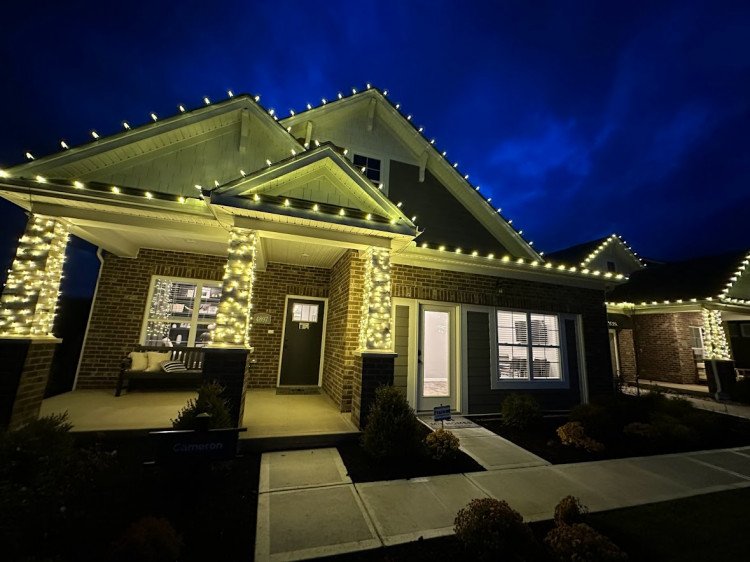
For anything you want to control, LED is the answer, and an LED light on pillars is what we install almost exclusively. LEDs run cool enough to wrap directly around wood, vinyl, brick or stone with no heat concern, they draw a fraction of the power the old incandescent strands did, and they let you run far more strands off a single outlet. The Department of Energy’s guide to LED holiday light strings has the numbers if you want them. Our pillar light wraps are built from commercial-grade LED mini light strands for those reasons, they come in warm white, cool white, pure white, blue, green and ruby red, and they arrive already sized to the column — a standard wrap covers a pillar up to eight feet tall and about ten inches wide at $90 per pillar, with the install and the takedown included.
Permanent Fixtures
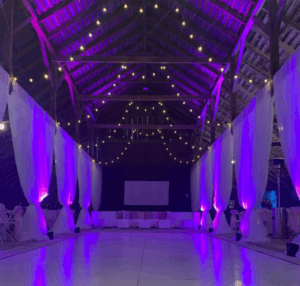
The third option is a fixture instead of a strand, and it is the one to consider if you are tired of a seasonal setup altogether. A light bar mounted flush on the column, or accents like RGB cubes and RGB globes, give you a lit entry twelve months a year on a timer, in whatever color you pick from your phone. Most homeowners pair one of those with a year-round lighting run under the eave so the roofline and the columns come on together. For event lighting specifically a wedding, a party under a portico we also place uplighting at the base of columns for the night, which grazes stone and brick and makes the texture show.
Color Options and Themes
Warm White
Warm white around 2700K — is the color of candlelight and fireplaces, and it is the default for most of what we install. On a pillar it flatters brick, stone, painted wood and vinyl equally, it does not fight the porch light, and it looks as right in July as it does at Christmas. If you only pick one color for pillars and never think about it again, this is it. The one rule: keep it consistent. Warm white columns under a cool-white floodlight is the mistake that quietly ruins more displays than anything else.
Multi-Color Options
Multicolor has a place, and it is a joyful one. Classic red-and-green wrapped columns beside a red-and-green roofline is a look people drive across town for. Our pillar wraps come in warm white, cool white, pure white, blue, green and ruby red, so a two-tone spiral say, red and white like a candy cane is a simple order.
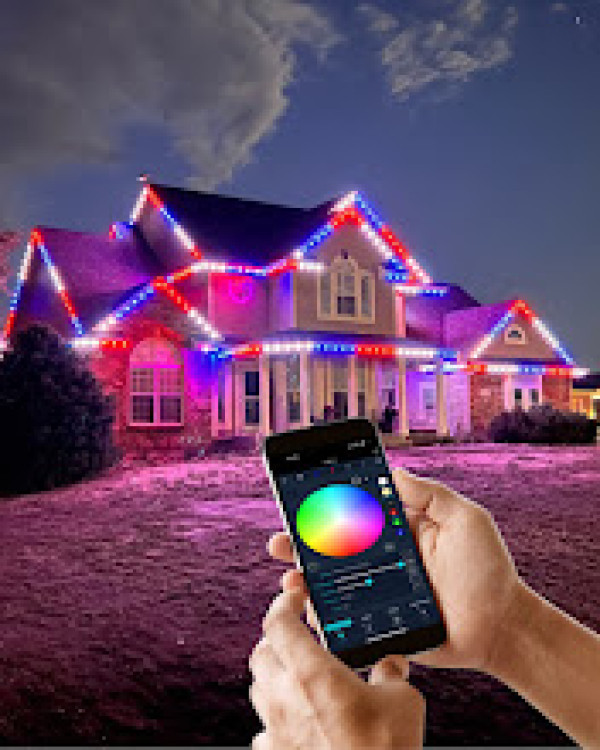
If you want color without committing to one, addressable RGB is the grown-up version. A year-round lighting system, or accents like RGB cubes and RGB globes, gives you warm white on a normal Tuesday, red and green in December, orange in October and school colors on game day, all from your phone.
Christmas Lights on Pillars
Creative Ways to Hang Christmas Lights on Pillars
Putting Christmas lights on pillars is the classic version of this job, and there are two patterns that cover almost every column we see.
Spiral Wrapping
The spiral is the one everyone pictures a candy-cane twist of light climbing the column. It works on round posts, square posts and tapered craftsman columns alike. The rule that makes it look professional is even spacing: pick a gap between turns (four to six inches is typical) and keep it exactly the same from base to cap. Start at the bottom, secure the first turn, and wrap upward so the plug ends near the outlet at the base. Two strands spiraled in opposite directions, or in two colors, give the crossed lattice look without any extra hardware.
Wide Piers and Square Columns
A slim porch post takes a spiral easily. A wide brick pier or a square stone column is a different shape, and the mistake people make is winding a single strand around it anyway, which leaves long dim gaps on the flat faces and a strand that sags off the corners by New Year’s.
The fix is not a different product, it is more of the same one. On a wide pier we run additional strands so each face carries its own vertical line, spaced evenly across the front and returning on the sides, which reads as a clean lit column from the street instead of a loose coil. On rough stone, where nothing grips well, we anchor at the cap and the base and let the strand’s own tension carry the middle. That is a judgement call about spacing and strand count rather than a kit you buy, which is why a pier that defeated a weekend of DIY usually takes us under an hour. Our pillar light wraps are priced per pillar and quoted to the actual size, so a non-standard pier is a custom fit rather than a problem.
Either pattern pairs with garland draped between the columns or along the porch rail, which is usually the piece that finishes the entry.
Choosing the Right Christmas Light Type
The bulb choice decides what the wrapped pillar looks like from the road.
Mini lights the small, closely spaced bulbs are the standard for hanging Christmas lights on pillars because they hug the column and give a continuous glow rather than a row of separate dots. They are what our pillar wraps use. C9 bulbs, the large traditional shapes, are the opposite: they are meant to be seen individually, which is why they belong along the roofline in packages like the Elf roofline rather than on a slender column, where they read as heavy. If you want the roofline to change color through the season, the color-changing C9 roof lights do that while the pillars below stay a steady warm white.
Whatever you choose, use LED, use outdoor-rated strands, and keep the color temperature the same across the house. If the roofline is warm white, the pillars should be warm white too. Our full Christmas lights range shows how the pieces are meant to sit together.
Lights on Gate Pillars
Lights on gate pillars are a different job from porch columns. Gate pillars stand out at the road, they are usually brick or stone, they are often a long way from power, and they are the first thing anyone sees. They set the tone before the house comes into view — which is also why a dark pair of piers makes an otherwise well-lit property look closed for the night.
The Seasonal Look
The look most people are after is simple, and it is made entirely of things we hang every week: a warm white wrap on each pier, a wreath mounted on the face at eye height from the road, and garland run along the top of a low wall or across the gate itself. On a wide stone pier we run extra strands so each face carries light rather than trying to coil one strand around a rough surface. If the drive is planted, ground lights along the edge and shrub lights on the plantings either side carry the eye from the road up toward the house, which is what makes a gate entrance feel like an entrance instead of two lit posts.
The Year-Round Look
Because gate pillars are permanent, exposed and usually nowhere near an outlet, this is the one place we steer most homeowners away from a seasonal strand and an extension cord across the lawn. A light bar mounted on the pier, or RGB globes set at the cap, give you a lit entrance every night of the year on a timer warm white for eleven months, red and green in December, orange in October, school colors on a game night, all from your phone. Run as part of a permanent lighting system it gets powered and weatherproofed once and then stops being a project. It costs more than a strand in year one and less than a strand by year four, and nobody climbs a ladder at the road in January.
Best Practices for Installation
If you have been searching how to hang Christmas lights on pillars, the honest answer is that the method matters less than the preparation. Here is how we do it.
Measure first. The height of the column times the number of turns tells you strand length; a typical eight-foot column with a five-inch spiral spacing needs roughly forty to fifty feet of mini lights. Our standard wraps fit columns up to eight feet tall and about ten inches wide, and non-standard sizes get a custom fit.
Test every strand on the ground before it goes up. Finding a dead section after it is wrapped is the most common way a Saturday afternoon disappears.
Attach without damage. On wood or vinyl, use light clips or removable outdoor mounting clips rather than staples or nails. On brick and stone, the seasonal answer is a zip tie or clip at the top and bottom and the strand’s own tension in between; the permanent answer is a properly anchored fixture.
Mind the power. Use outdoor-rated extension cords, plug into a GFCI-protected outlet, keep connections off the ground and away from standing water, and put everything on a timer. Do not exceed the strand-to-strand limit printed on the packaging. The CPSC’s holiday safety guidance linked above is short and worth two minutes.
Know when to hand it off. A single porch column on a dry afternoon is a reasonable weekend job. Twelve-foot columns, a two-story entry, or gate pillars at the road with no nearby outlet are a different calculation. We made that case in five reasons to hire a professional Christmas light installer, and our guide to outdoor Christmas light installation near me covers what hiring it out typically costs and when to book.
If you would like the pillars, roofline and entry handled together, get in touch with Lights Around. We walk the property, talk through what you want it to look like from the street, and put a fixed plan together. Installation, takedown and storage are included, and you can check the service areas page to confirm we cover your city — we work across Fredericksburg, Woodbridge and Occoquan, Manassas, Fairfax, Culpeper, Richmond and Charlottesville, among others.
