


Will Christmas Light Installation Damage My Roof or Gutters?
It’s the question a lot of homeowners ask right before they book: if someone hangs lights along my roofline, will I find holes in my shingles or bent gutters in January?
Christmas lights themselves don’t damage a roof or gutters. What causes damage is how they’re attached and how they come down. Nails, staples, pried-up shingles and lights ripped off in a hurry are what leave marks. Clips made for your roof and gutter type don’t.
Here’s what actually causes damage, why professional installers hang Christmas lights without nails, and which clips fit each kind of roof.
Prefer to talk? Call (703) 634-6008
Quick answer
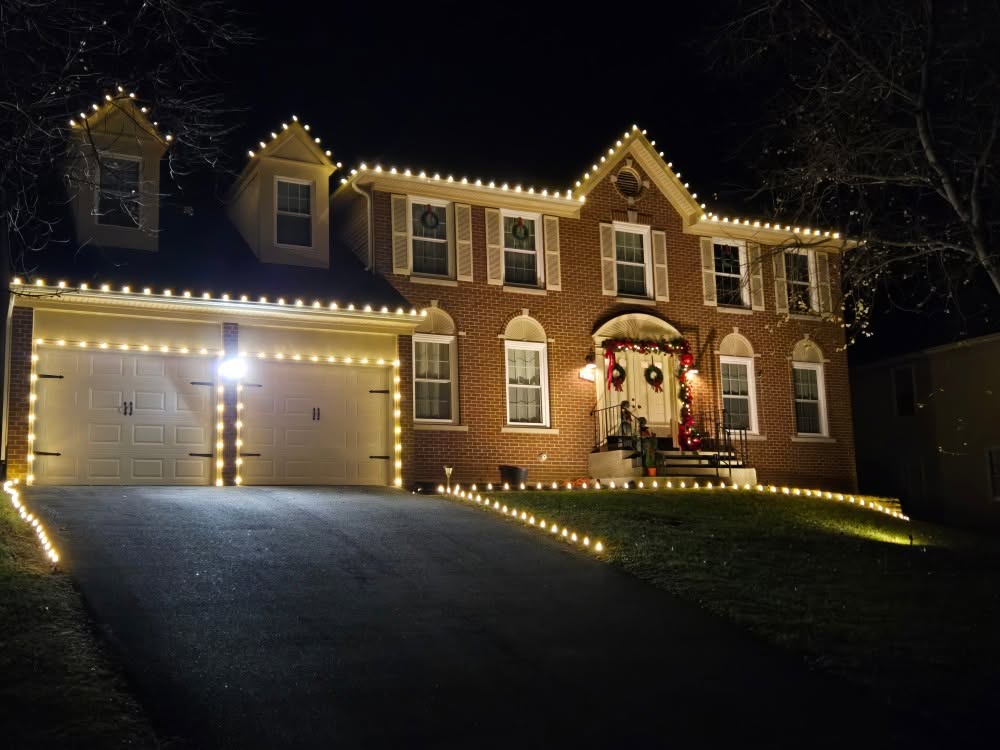
No, not when the lights are hung with the right clips. Gutter clips hook over the gutter’s edge, and shingle tabs slide under the shingle edge, so nothing goes through your roof. Damage comes from nails, staples, lifting brittle shingles, bending the gutter lip, or pulling the lights down by the strand. Lights Around never uses nails to hang your lights.
What Actually Damages a Roof or Gutters When Lights Go Up
When lights do leave damage behind, it almost always comes from one of these:
- Nails, tacks or staples driven through shingles, trim or gutters. Every one leaves a hole that water can get into.
- Lifting shingles too far to slip a clip underneath, which can crack or loosen them, especially on older or cold, stiff shingles.
- Bending the gutter lip with the wrong clip or with lights pulled too tight.
- Pulling lights down by the strand at takedown, which yanks clips and anything they're attached to.
- Walking on a fragile roof like slate without knowing where it's safe to step.
Notice that none of these are the lights. They’re all about the hardware and the hands doing the work.
Why Professionals Don't Use Nails or Staples
Hanging Christmas lights without nails isn’t just about protecting your roof. It protects the lights, too.
A nail or staple puts a permanent hole in your shingles, fascia or gutter, and holes are how water gets in. Some roofing guides also warn that nails and staples in the roof can cause problems with your roof warranty, so it’s worth checking yours if you’ve ever hung lights that way yourself.
There’s a wiring reason as well. A staple or nail pressed against a light strand can damage the wire’s insulation.
What the CPSC says
The U.S. Consumer Product Safety Commission tells homeowners not to use nails or tacks to hold light strings in place, and to fasten outdoor lights securely so wind can’t pull them loose. Its suggested alternative: run the strings through hooks. (Source: CPSC holiday decorating safety guide)
Clips do both jobs. They hold the line tight against wind, and they come off at the end of the season without leaving a mark. That’s why our crew never uses nails to hang your lights.
Christmas Light Clips by Roof and Gutter Type
There’s no single clip that works on every house. Here’s what professional installers generally use on each surface.
| Surface | Clip type | How it holds |
|---|---|---|
| Gutters | Gutter clip or hook | Hooks over the gutter’s front lip |
| Asphalt shingles | Shingle tab | Slides under the bottom edge of the shingle |
| Roof ridge and peaks | Ridge clip | Sits over the ridge cap |
| Metal roof (steel) | Magnetic clip | Holds by magnet, no fasteners |
| Slate | Gutter-line or surface-specific clips | Avoids lifting or stepping on brittle slate |
| Wood shakes | Shingle tab | Slides under the shake edge |
| No gutters, brick, railings | Fascia, brick or wedge clips | Grip the trim, brick edge or rail |
Gutters
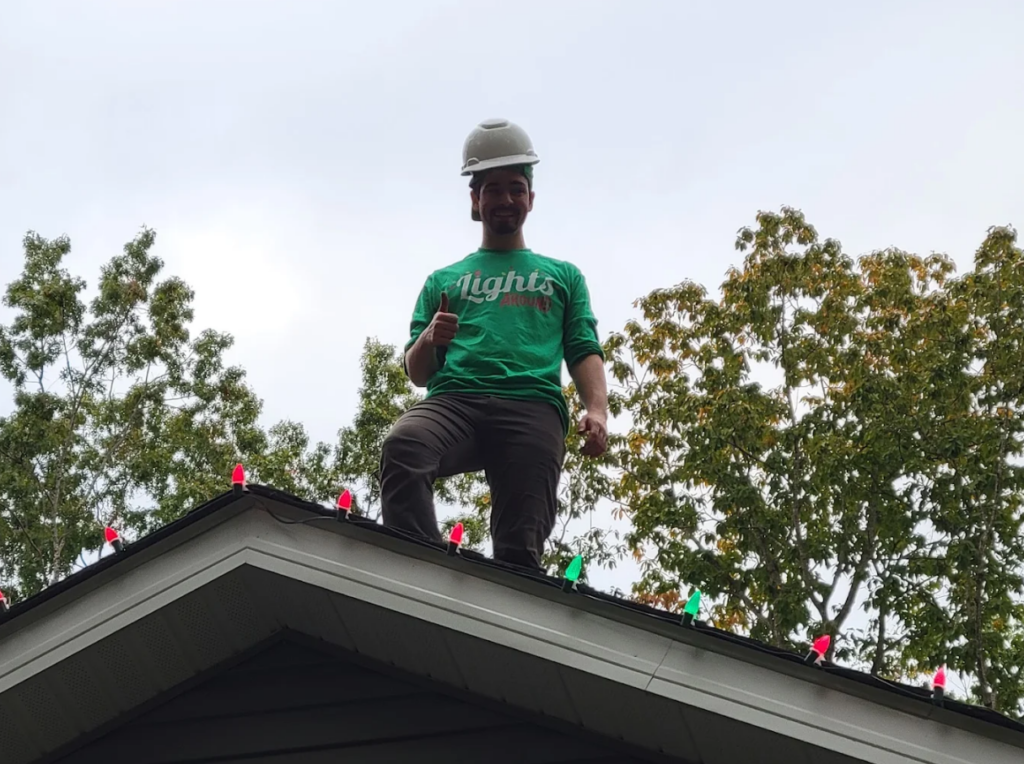
Do Christmas lights damage gutters? Not when they’re on gutter clips. These hook over the front lip of the gutter and hold the light line along the edge. Nothing is screwed in, and nothing sits inside the gutter channel. The two things to avoid are clips that bend the lip and lights pulled so tight they tug on it.
Asphalt Shingles
For Christmas lights on shingles, the standard is a shingle tab. It slides under the bottom edge of the shingle and grips from below, so there’s no hole and no adhesive. The trick is not lifting the shingle any more than the tab needs. Lifting too far is how shingles crack, especially in cold weather.
Roof Ridge and Peaks
To outline a peak or the top line of a roof, ridge clips sit over the ridge cap and hold the strand along the top edge. This is how a roofline gets that clean outline on gables and peaks.
Metal Roofs
Steel roofs and gutters can use magnetic clips, which hold without any fasteners at all. One catch: magnets only stick to steel. Aluminum and copper aren’t magnetic, so those need a different clip.
Slate
Slate looks tough, but it’s brittle. Tabs that pry under the slate edge and careless foot traffic are the biggest risks. On slate, installers usually keep the lights on the gutter line or use clips designed for that surface, and they’re careful about where they stand.
Wood Shakes
Wood shakes take shingle tabs much like asphalt shingles do: slide the tab under the edge without forcing it.
Homes Without Gutters, Brick and Railings
No gutters? Clips can go under the shingle edge or onto the fascia. Brick clips grip the edge of a brick without drilling into the mortar. Porch railings and fence tops use wedge-style clips. For brick or stone porch columns, wraps are often simpler than clips; our pillar light wraps go around the column instead of attaching to it.
How Lights Around Protects Your Roof and Gutters
Picking the right clip starts before anyone gets on a ladder. Here’s how we handle it:
No nails, ever
Our crew never uses nails to hang your lights. We only drill when a heavy wreath or a safety anchor needs secure mounting, and we talk with you before we do.
We ask about your roof up front
Our quote form asks for your roof surface (shingle, metal, metal and shingle, slate, wood or other) and how tall your home is, including steep roofs. That's how the crew shows up ready for your house.
We check the roof before anyone climbs
Each property is evaluated for safety first. If part of a roof isn't safe to work on, we change the design to protect the crew and your home.
Trained and insured crews
Our crews are trained in ladder safety, roof access, anchoring, electrical work and property protection, and Lights Around carries liability insurance and workers' compensation.

The lights are also cut to the exact shape of your roof. On our roofline packages, that means no loops, no sagging and no cords across the gutter. In January, the crew takes everything down, so you’re not the one on a ladder pulling clips off in the cold.
If anything looks wrong after install day, tell us within 24 hours so we can fix it. Want to see how the whole season works, from quote to takedown? Read how professional Christmas light installation works.
What You Can Do Before Install Day
A few minutes of prep helps the crew protect your house:
- Pick the right roof surface on the quote form. If you're not sure, choose "Unknown" and send a photo.
- Tell us about loose gutters, damaged shingles or recent roof repairs, so we can plan around them.
- Trim trees and bushes near the roofline before your install date.
- Make sure your outdoor outlets work, so no cords need to be run in odd places.
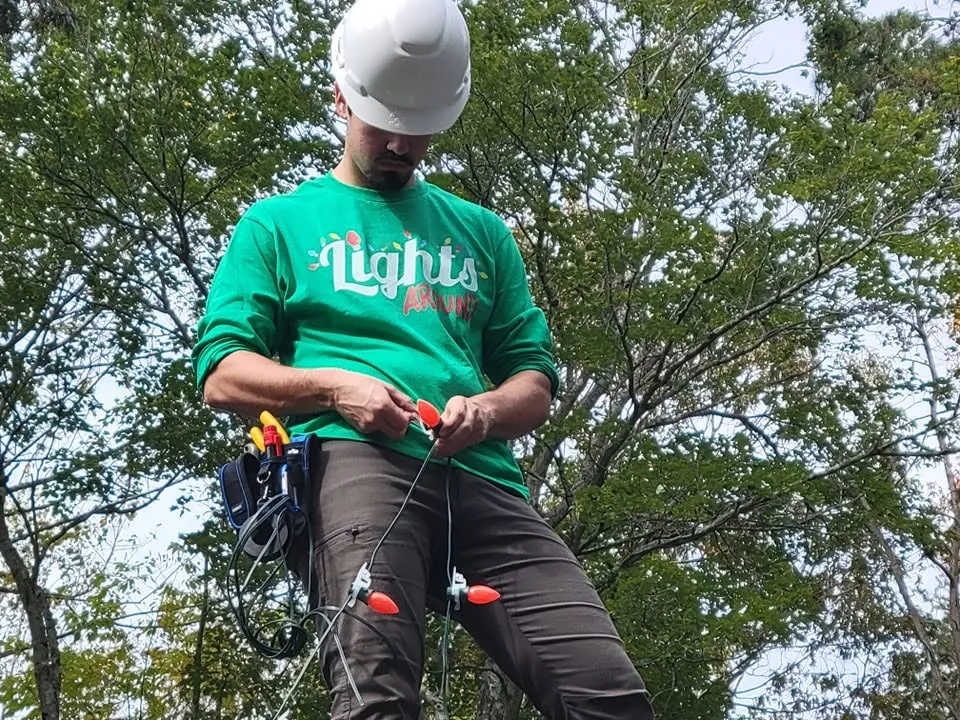
Not sure which parts of your home to light? Our zone-by-zone guide to outdoor Christmas lights covers the roofline, trees, pillars and more.
Frequently Asked Questions
Do Christmas lights damage gutters?
Not when they’re hung with gutter clips that hook over the front lip. Damage comes from screws or nails, clips that bend the lip, or lights pulled too tight.
What are the best Christmas light clips for a roof?
It depends on the surface. Shingle tabs for asphalt and wood shingles, gutter clips for gutters, ridge clips for peaks, and magnetic clips for steel. Slate and homes without gutters need clips made for those surfaces.
Can you put Christmas lights on shingles without damaging them?
Yes. Shingle tabs slide under the shingle edge and grip from below, so nothing goes through the roof. The key is not lifting the shingle further than the tab needs.
Will you need to drill or nail into my house?
We never use nails to hang your lights. We only drill when a heavy wreath or a safety anchor needs secure mounting, and we talk with you before we do.
Can you hang lights on a steep or very tall roof?
In many cases, yes. Every property gets a safety evaluation first, and the quote form asks if your home has a steep roof so we can plan ahead.
Is permanent lighting attached differently?
Yes. Permanent lighting uses a low-profile track that sits tight to your trim and stays up year-round. See our permanent lighting options, or read what permanent Christmas lights cost, plus the pros and cons.
Get Your Lights Up Without the Worry
Christmas lights shouldn’t cost you a roof repair. With clips matched to your roof and gutters, no nails, a safety check before anyone climbs, and a trained, insured crew handling both install and takedown, your house looks the same in January as it did in October. Tell us your roof type, send a photo, and you’ll get your design and full price within 1 business day.
