

Will an HOA Let You Install Permanent Christmas Lights in Virginia?
By Lights Around | Oct 2026 | 5 min read
Short answer
Usually yes, with written approval. Boards care about the daytime look, color, brightness and schedule.
Most HOAs in Virginia will let you install permanent Christmas lights, but you almost always need written approval first. The board is rarely against the idea. What they care about is how the lights look in daylight, what color they run, and how bright they are at night.
That’s good news if you’ve been wondering whether permanent Christmas lights and your HOA can coexist. In our experience installing across Northern and Central Virginia, a well-prepared request gets approved far more often than a rushed one. The difference usually comes down to what you hand the board.
This guide walks through what HOAs actually look for, how to ask for approval step by step, and what to do if the answer is “not yet.” If you’re still deciding whether permanent lights make sense at all, our guide to what permanent Christmas lights cost and the pros and cons is a good place to start.
What HOA Boards Actually Look At
Permanent lighting is still new enough that many associations haven’t written a specific rule for it. So when a request for permanent lighting HOA approval comes in, the board falls back on its general exterior modification and lighting guidelines. Here is what they tend to focus on.
How It Looks in Daylight
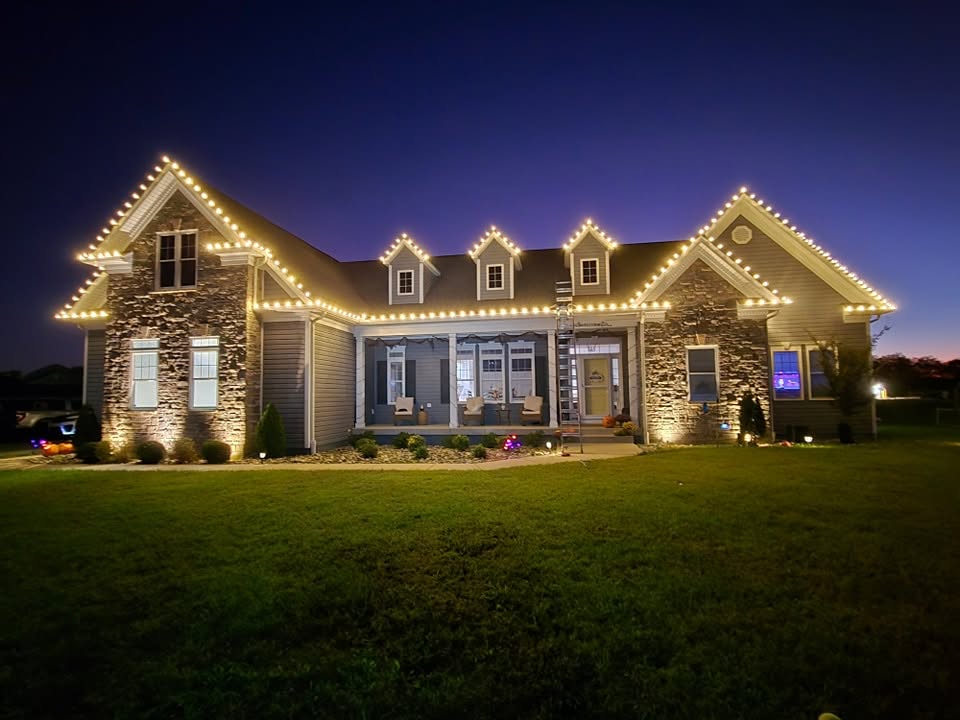
This is the first thing most boards ask about. Nobody wants a visible strand of lights on the front of the house in July. A permanent system uses a slim aluminum channel that fastens to the fascia, and the channel can be powder-coated to match your trim in white, bronze, black, or brown. From the street, it reads as part of the trim line.
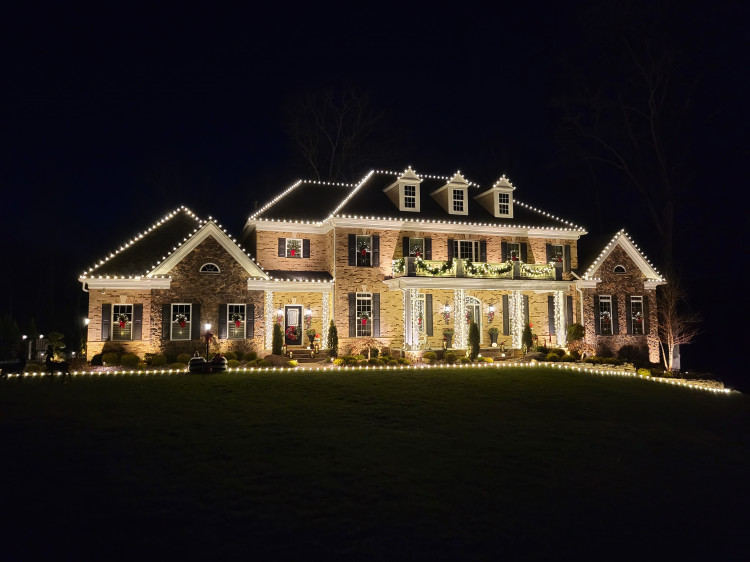
That’s the photo a board wants to see: the same house at noon, with the system installed.
Color and Brightness at Night
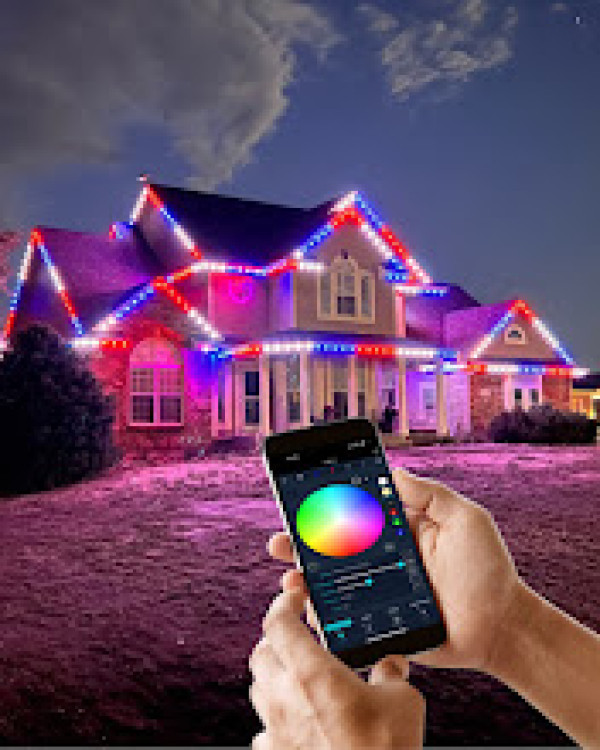
The second concern is what the lights do after dark. A system that runs full color all year makes boards nervous. One that runs warm white most nights and switches to color for actual holidays rarely does. Brightness matters too, so it helps to say up front that the system is dimmable and can be capped at a level that suits your street.
Which Way the Lights Face
Boards also want to know the lights won’t shine into a neighbor’s windows. Runs that face downward or outward along the roofline, rather than up and across, are an easy answer to that question.
Timing and Schedule
Some covenants limit when decorative lighting can be on, or how long holiday displays can stay up. Permanent systems run from an app, so you can schedule them to switch off at a set hour and show the board exactly what that schedule is.
Hardware and Roof Impact
The system mounts to the fascia board, not through the shingles, so nothing penetrates the roof surface. It’s worth saying that in your request, because “will this damage the roof?” is a common follow-up from board members.
Watch how permanent roofline lighting works. A quick look at the system your board will be reviewing.
How to Get HOA Approval for Permanent Lights, Step by Step
Getting HOA approval for permanent holiday lights in Virginia is simpler than it sounds. Most requests go through the same handful of steps.
- Read your governing documents first. Look in your declaration of covenants and any architectural or design guidelines. Search for words like “exterior lighting,” “decorative lighting,” and “exterior modifications.” This tells you whether you need a formal application or a simple notice.
- Find out who approves it. In most communities it’s an architectural review committee (ARC) or the board itself. Your management company can usually tell you in one email.
- Ask about the submission process. Some HOAs have a form, some want a letter, and some only meet monthly. Knowing the meeting calendar early keeps you from losing weeks.
- Get a spec sheet and photos from your installer. This is the part that makes the biggest difference. A board can approve a system it can see on paper far more easily than one it has to imagine.
- Submit a complete request. Include everything in the checklist below so the committee doesn’t have to come back with questions.
- Wait for written approval before installing. A verbal “that should be fine” won’t help you if a neighbor complains later. Keep the approval letter or email.
Sending the request at least a few weeks before you want the work done is a good rule. If you’d like it up for the holidays, that means starting now rather than in November.
If you’re in one of our service areas, we’re happy to help you put the package together. You can see where we install on our service areas page, including Loudoun County, Woodbridge, Manassas, and Fairfax.
What to Include in Your HOA Application
A short, complete package is the easiest to approve. Here is what we’d put in it:
- A short description. Two or three sentences on what’s being installed and where, for example a permanent LED roofline system along the front fascia.
- A daytime photo. The installed system on a similar home, taken in daylight, so the board can see how it blends with the trim.
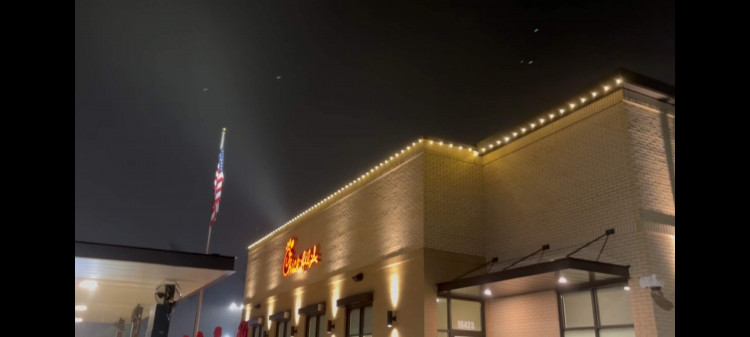
- A nighttime photo. The same system lit, in warm white and in a holiday color.
- The channel color. State which finish matches your trim: white, bronze, black, or brown.
- A lighting plan. Where the runs go, and which direction they face.
- Your default settings. For example: warm white as the everyday color, color only on holidays, dimmed to a set level, off by a set time each night.
- A mounting note. The system fastens to the fascia, not through the shingles.
- The installer’s details. Company name, insurance information, and contact info.

We provide the spec sheet and daytime photos when we quote, because boards ask for them almost every time. It also helps to mention that you’ll work with an insured local installer, not DIY, since that answers a lot of the board’s unspoken questions about quality and liability.
What If the HOA Says No or Asks for Changes?
A “no” isn’t always final. Boards usually push back on specifics, and specifics can be changed. Here is how the common responses play out.
| What the board says | What usually helps |
|---|---|
| “We’re worried about how it looks in the daytime.” | Offer a trim-matched channel color and share a daylight photo of a finished home. |
| “Full color all year is too much.” | Set warm white as the default and limit color to holidays and special dates. |
| “It might shine into neighbors’ windows.” | Show the lighting plan and point out downward or outward facing runs. |
| “We don’t have a rule for this.” | Ask whether the board will approve it as an exterior modification, in writing, so it’s on record. |
| “We need to see it first.” | Ask whether the installer can share photos of a similar installation in your area. |
If the board still declines, you have a few options. You can ask which changes would make it approvable, then resubmit. You can ask to be heard at the next board meeting, where a short conversation often clears up what a written request couldn’t. Or you can ask whether the covenants allow a trial approval for one season.
If you believe the rejection conflicts with your governing documents or with Virginia law, it’s worth speaking with a real estate attorney. We can’t give legal advice, but we can give you everything you need on the lighting side of the conversation.
Need HOA paperwork?
We’ll send the spec sheet and daytime photos your board will want to see.
Frequently Asked Questions
If your community has an HOA with exterior modification rules, almost certainly yes. Permanent lights are fixed to the house, so they’re usually treated as an exterior change, not seasonal decor. Check your covenants or ask your management company before you book anything.
We’d advise against it. If the board later says no, you could be asked to remove the system, and that’s an expensive way to find out. A written approval protects you.
It depends on the committee. Some respond in a week or two, and others only meet once a month. Ask about the meeting schedule when you first reach out, and plan on a few weeks.
Often, yes. Seasonal lights are temporary, so many HOAs allow them for a set window around the holidays. A permanent system stays up all year, so the board looks more closely at how it appears in daylight and how it will be used.
Ask for a written approval anyway. Boards are usually glad to have a record, and it protects you if a neighbor raises it later.
Warm white as the default is the easiest. Color for holidays and special dates is a pattern boards tend to accept. Full color running every night all year is the hardest to get through.
Yes. When we quote a permanent lighting project, we share the spec sheet and daytime photos you’ll want to include with your application.
Ready to Ask Your HOA?
Permanent Christmas lights and HOAs can work well together when the request answers the board’s questions before they ask them. Show how the system looks in daylight, keep the everyday color simple, and get the approval in writing. That’s most of it.
If you’d like help with the lighting side, we’ll walk your property, measure the runs, and send you the spec sheet and daytime photos your board will want to see. Request a quote and mention that you need HOA paperwork, or take a look at our permanent roofline lighting page to see how the system works first.
Our light will delight, and we’ll help you get it approved.
